What to do in Monopoli
A quarter of an hour from the masseria, a fishing harbour still very much at work, a sixteenth-century castle, and an old town twice the size of Polignano's. Here's what there is to see, and how to find your way around.
Why Monopoli
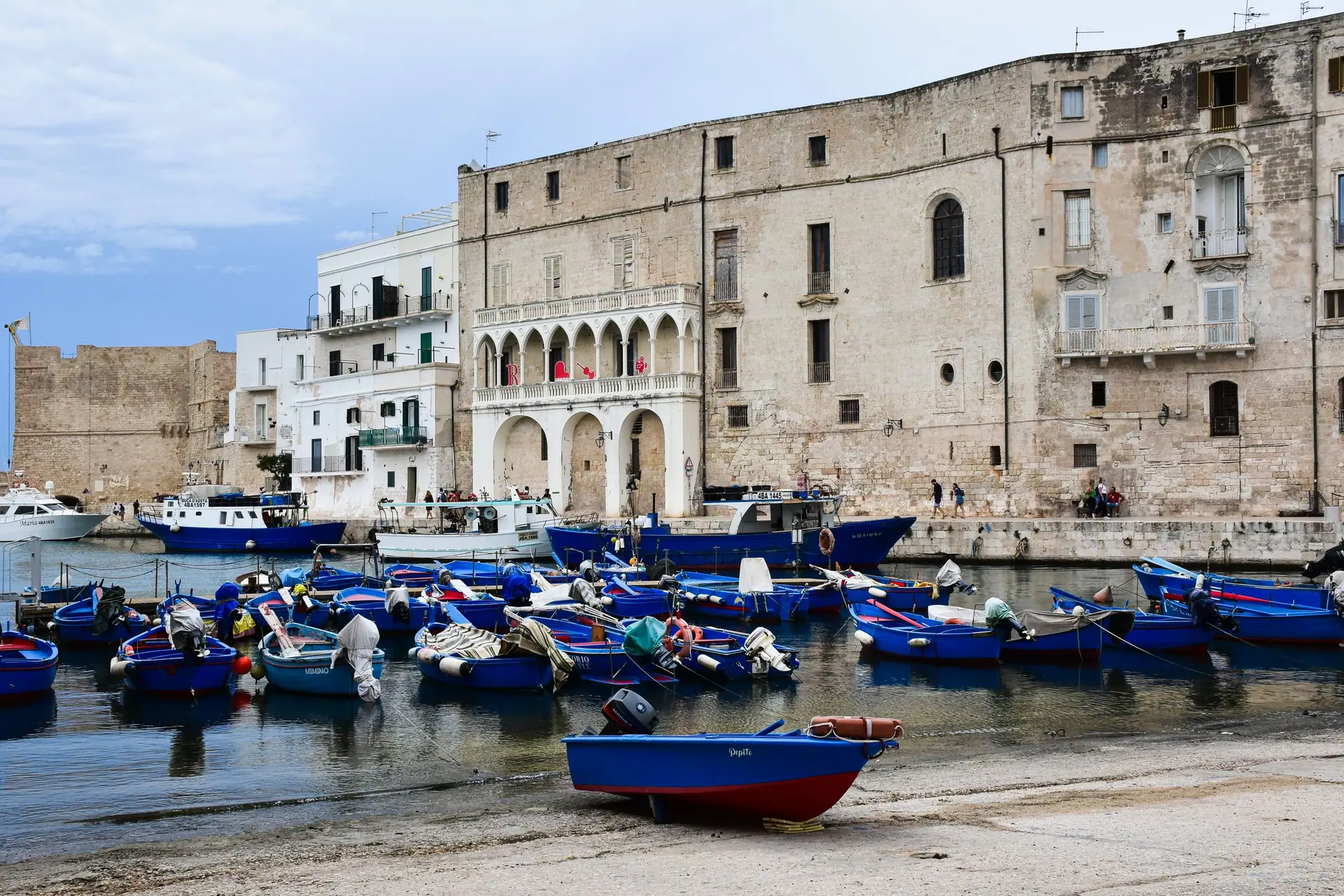
If Polignano a Mare is a town you look at from its cliffs, Monopoli is one you live from its harbour. The difference comes down to a single image: where one hangs its houses over open air, the other sets them at the edge of a working basin where the boats still come in every morning. This isn't a balcony town — it's a quayside one.
The origin of the name is still debated. The most commonly cited theory traces it to ancient Greek for a 'single city' — a port without rival between two other ancient towns on this coast. Another theory points instead to the 'city of Minos'. What's established archaeologically, though, is that a settlement stood here as early as the fifth century BC, under Messapian rule, long before Rome gave it its Latin name.
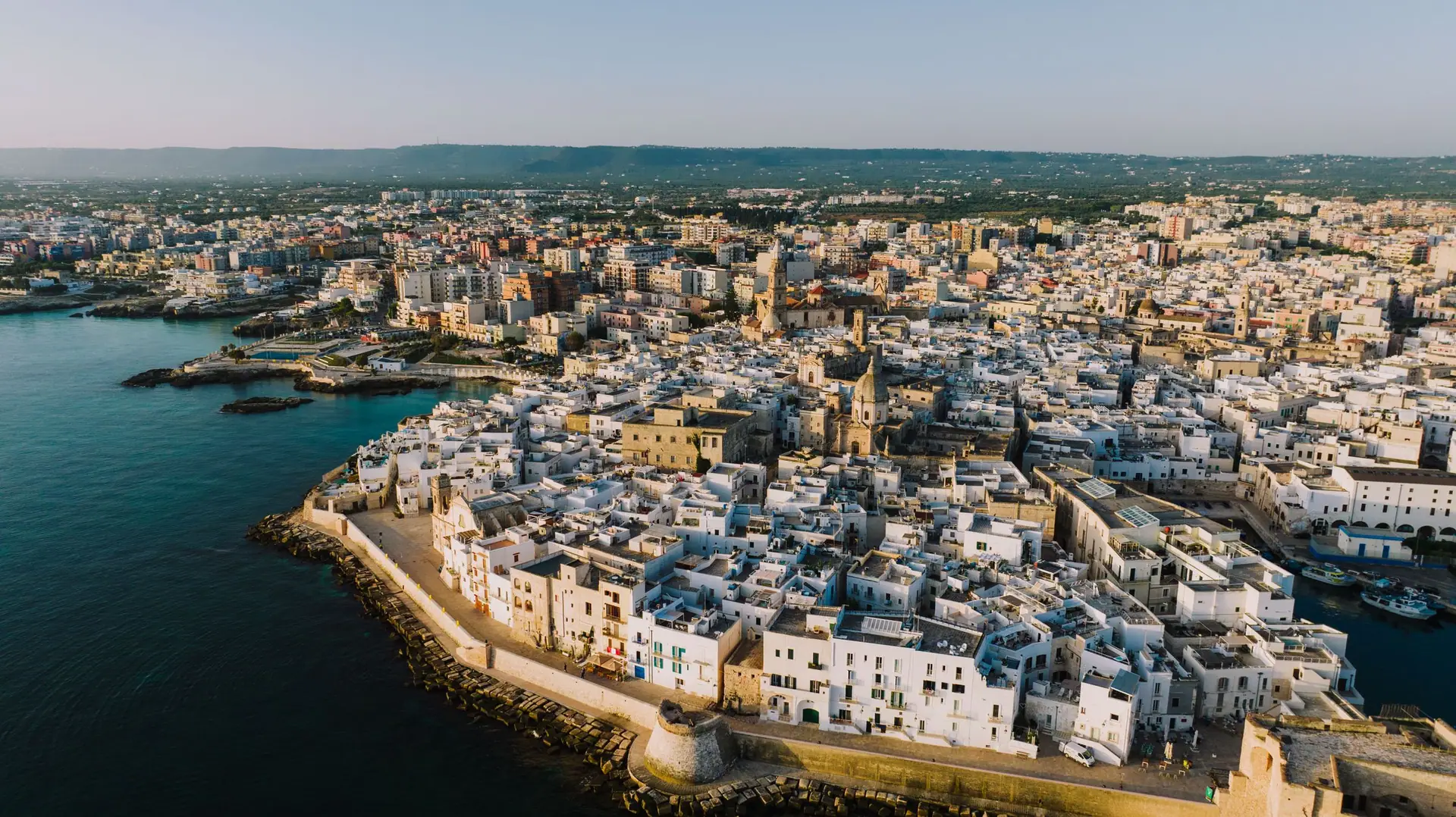
The real turning point comes in the Renaissance. Venice held the town from 1484 to 1530, leaving behind a siege still remembered locally, before Spain took over: the walls were extended, and the castle was reinforced under Charles V to hold off Ottoman and Barbary raids. It's this defensive architecture, still clearly visible around the harbour today, that gives Monopoli its character — a town that for centuries had to defend itself from the sea as much as live off it.
The result, for anyone coming from Polignano, is a complete change of scene fifteen minutes down the road: a historic centre considerably larger, a proper working harbour rather than a cove to admire, and countryside beyond it that was once vast enough to contain Alberobello and its trulli.
The old harbour and the castle
The porto antico is Monopoli's centre of gravity. It's a basin held tight between the old pier and the town walls, where the gozzi — traditional blue-and-white fishing boats — moor close together, hull to hull. In the morning the fishing activity here is real, not staged for visitors; in the evening the same quaysides make for an easy stroll, the harbour lights reflected in still water.
The Castle of Charles V stands guard over the harbour entrance. Built in the sixteenth century and reinforced in 1552 under the emperor's reign, it was part of a chain of coastal fortifications built to answer Ottoman raids and Barbary piracy — a threat taken very seriously along this coast for two centuries. Today the castle hosts temporary exhibitions and cultural events, and its terraces give one of the best views over the harbour and the old town.
It's no accident that Monopoli held out during the Venetian siege of 1495: by then the town was already one of the best-defended strongholds on the southern Adriatic coast. Its residents eventually bought back their freedom from Venice in 1530, for the considerable sum of 51,000 gold ducats — an episode still remembered in local history.
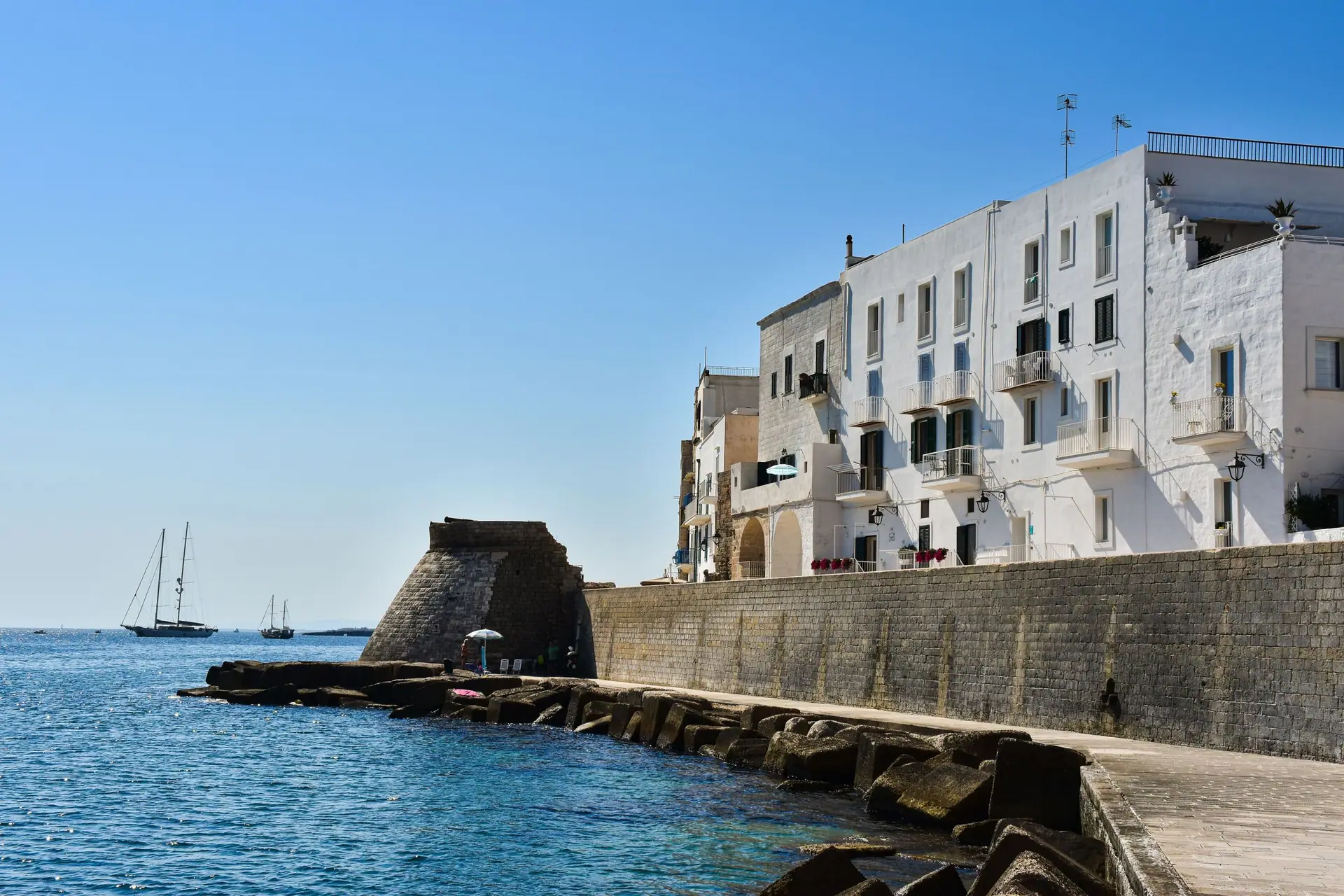
Around the basin, the sixteenth-century town walls are still largely standing — it's against them, in fact, that Cala Porta Vecchia, the first cove south of the centre, nestles. Few towns in Puglia keep such a clear continuity between their fortifications, their harbour and their coastline.
The cathedral and the old town
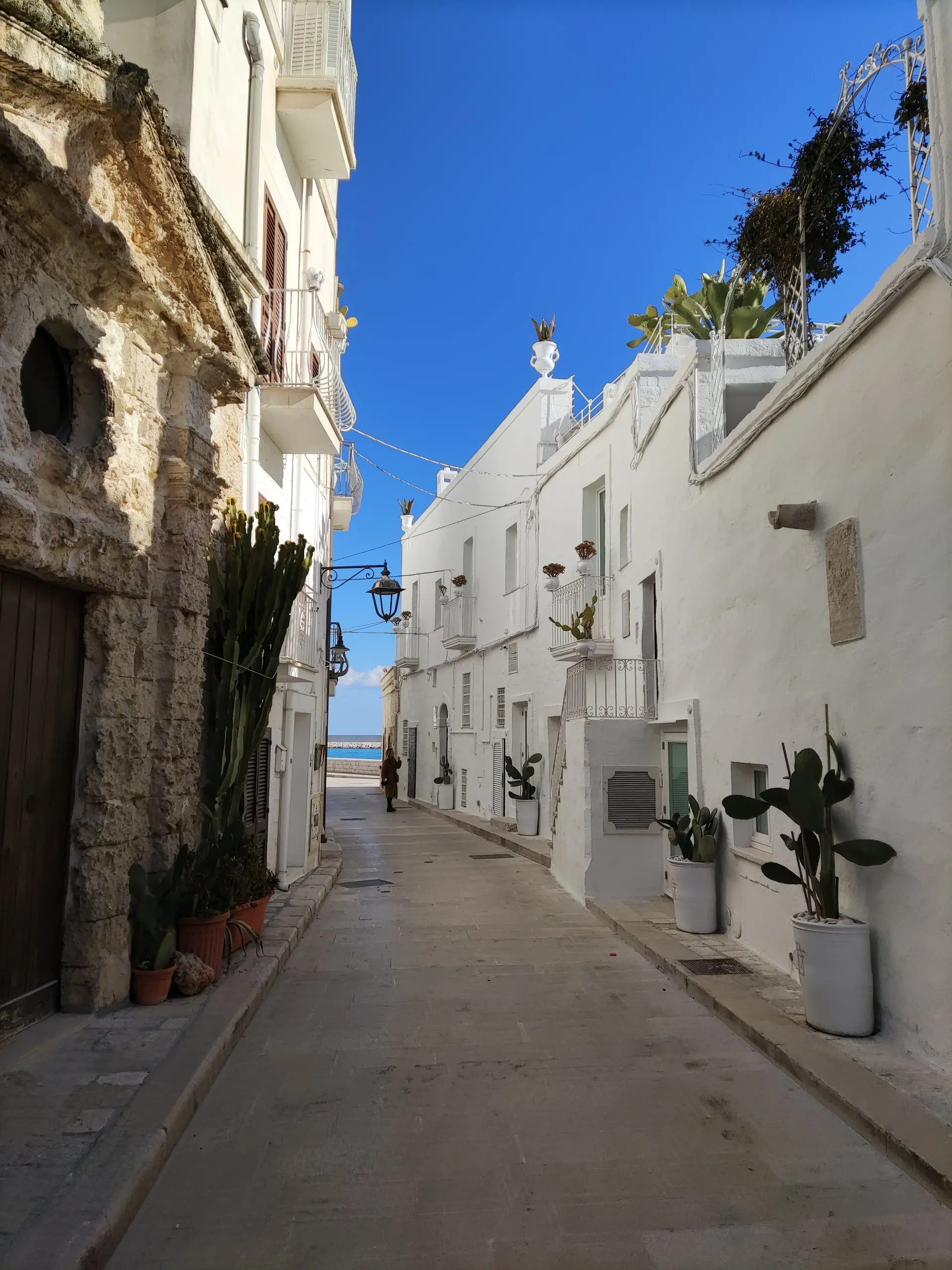
Monopoli's historic centre is noticeably larger than Polignano's, and there's no set route through it: white lanes, stone arches running from one façade to the next, small squares that open up without warning.
Its heart is the Concattedrale Maria Santissima della Madia. An earlier church dedicated to Saint Mercurius stood here before 1107; Bishop Romualdo undertook its reconstruction, completed around 1117. The building standing today, in the Baroque style, dates from a later campaign of works begun in 1742, after the previous structure had deteriorated too far. Inside is kept the icon of the Madonna della Madia, which tradition says arrived by sea on a wooden raft — a founding episode still marked every year with a procession.
A few steps away, the Palazzo Martinelli is worth looking up at: its eighteenth-century neoclassical loggia, with white arches, owes its design to the Venetian influence still visible in the town's civic architecture. The surrounding countryside also holds several rock-cut churches, hollowed straight into the stone in the manner of those found across the Murgia — more hidden places, which reward a bit of curiosity.
The coves south of the centre
The town's coastline runs for around fifteen kilometres, almost entirely south of the historic centre, alternating rocky coves and sandy beaches — a variety that Polignano, all cliffs, doesn't offer.
Cala Porta Vecchia is the first and the most convenient: sandy and shallow, set against the sixteenth-century town walls, a few minutes' walk from the harbour. It's the beach for families with young children. Just to the south, Cala Cozze is its opposite — a cove of flat rocks and pebbles, quieter, better suited to swimming and snorkelling.
A little further on, Porto Ghiacciolo takes its name from a freshwater spring that noticeably cools the sea here — hence the name, literally 'the ice lolly'. It sits beneath the abbey of Santo Stefano. Further south again, the Capitolo area unfolds long stretches of sand, split between free beaches and equipped ones.
Several of Monopoli's beaches are regularly recognised with the Blue Flag, the European label for bathing-water quality — a useful marker if clear water matters more to you than the scenery.
The general logic here, as along the rest of this coast, is simple: the further south you go from the centre, the quieter the coves get and the more varied the seabed becomes. A morning at Cala Porta Vecchia for convenience, an afternoon at Cala Cozze or further still for quiet — the town's fifteen kilometres of coastline leave plenty of choice.
The abbey of Santo Stefano
Set slightly above the sea, overlooking the beach that shares its name, the abbey of Santo Stefano was founded in the eleventh century by Benedictine monks. Its position, like that of the castle at the harbour, is no accident: on a coast exposed to raids from the sea, religious communities needed to defend themselves too.
The complex isn't a museum to be toured — it's above all a landmark in the landscape, the silhouette you spot arriving at Porto Ghiacciolo, and a reminder that the countryside around Monopoli is shaped as deeply by its religious history as by its military one.
The countryside and its masserie
Monopoli's territory covers 158 square kilometres — one of the largest in Puglia — and its geography tells a story of its own. The land rises from the coastal plain to the first slopes of the Murgia, a limestone plateau that reaches, within the municipality, over 400 metres.
In the Middle Ages this territory was wider still: it included the land that is now the towns of Fasano, Locorotondo and Alberobello, before they broke away. It's in this same countryside, at the edge of the territory, that you'll find the archaeological site of Egnazia, an ancient Messapian and later Roman city, on the same coast, less than half an hour away.
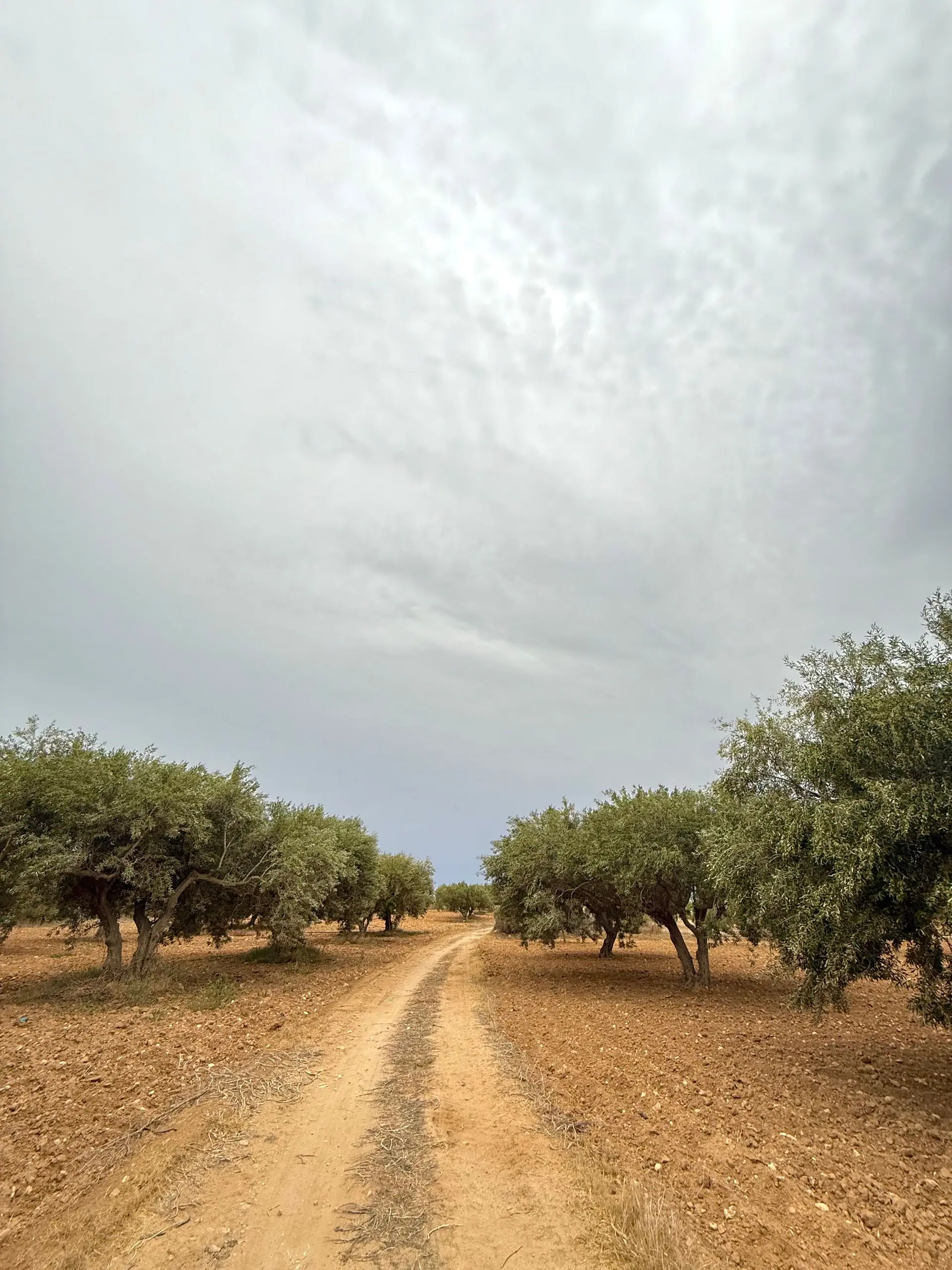
It's also the land of fortified masserie, conical-roofed trulli, and centuries-old olive trees behind kilometres of muretti a secco — the dry-stone walls that cut through the landscape without mortar or cement, a technique recognised by UNESCO. Masseria 1863 belongs to this world: a fortified nineteenth-century farmhouse among its olive trees, roughly midway between Monopoli and Polignano.
This landscape is best crossed slowly, by car: country roads wind between the dry-stone walls, pass other masserie still lived in or converted, and sometimes open without warning onto a village of trulli. It's another way of getting to know the region — less dramatic than a cliff or a harbour, but it's exactly what explains why so many travellers choose to stay out here rather than in town.
Where to eat, and what
As with Polignano, no addresses here — restaurants change faster than guides get updated. The categories, though, don't change.
The harbour has its fish restaurants, often simple, where the morning catch sets the menu. The historic centre has its back-lane trattorias, for straightforward Puglian cooking. And there's what you eat standing up, on the move: the fried panzerotto, thick focaccia topped with tomato, and burrata — a Puglian speciality found on every counter, even though its hometown, Andria, lies further north, in a different province.
From the countryside, shopping at the market and cooking at the masseria often remains the best choice: the vegetables and fruit follow the season closely, just minutes from the house.
A day from the masseria
Monopoli suits a different rhythm from Polignano — more spread out, less built around a single viewpoint.
In the morning, head for the harbour: it's when the fishing activity is liveliest, and the lanes of the centre are still cool and quiet. An hour or two is enough to see the castle, the cathedral, and wander without any particular aim.
Around midday, make for a cove to the south — Cala Porta Vecchia for ease, Cala Cozze for quiet. The afternoon passes there without effort, the sea on hand.
By the end of the day, head back to the masseria for drinks by the pool, before going back down for dinner in town if the mood takes you: the harbour, lit up, makes for a fine evening.
When to go
The climate follows the same pattern as the rest of this coast: mild, rainy winters and long, hot, dry summers. Spring and early autumn remain the most pleasant seasons for walking through the historic centre without the heat getting the better of you.
In summer, the harbour and the coves closest to the centre fill up considerably — the price of a territory that, for all its size, remains a heavily visited destination in July and August. The coves further south, around Capitolo, absorb the crowds better.
As everywhere in this countryside, a car isn't optional: it's what connects the masseria to the harbour, the coves and the neighbouring villages, all year round.
Frequently asked questions
- How long does it take to visit Monopoli?
- Half a day is enough to see the harbour, the castle and the cathedral without rushing. Allow a full day if you add a cove to the south in the afternoon. The historic centre, larger than Polignano's, also lends itself to wandering without a set route.
- Should you choose Monopoli or Polignano a Mare?
- Both, if your stay allows it — they're a quarter of an hour apart. Polignano is dramatic and compact, built on its cliffs; Monopoli is larger and more lived-in day to day, with a proper fishing harbour and sandy coves to the south. Staying in the countryside between the two means you don't have to choose.
- Is Monopoli's harbour easy to visit?
- Yes, there's nothing to book: the porto antico is a public space, open at all times, that you walk along between the castle and the town walls. Morning for the fishing activity, end of day for the atmosphere and the light.
- Are Monopoli's beaches reachable on foot from the centre?
- Cala Porta Vecchia, the closest, is a few minutes' walk from the harbour. The coves further south, including Porto Ghiacciolo and the Capitolo area, require a car.
- Can you explore the area around Monopoli without a car?
- Within the historic centre, no problem — everything is reachable on foot. For everything else — the coves to the south, the countryside, neighbouring villages such as Polignano or the villages of the Murgia — a car is needed, as everywhere in this part of Puglia.
- What does the Castle of Charles V host today?
- The castle today serves as a venue for temporary exhibitions and cultural events, with a programme that varies through the year. Its terraces remain open for the view over the harbour, which alone is worth the visit.
Stay a quarter of an hour from Monopoli
Masseria 1863 is a countryside house for eight guests, with its own pool and olive garden, between Polignano a Mare and Monopoli.