What to do in Locorotondo
Forty minutes from the masseria, a white village built in a circle on a hilltop in the Itria valley. Less visited than Alberobello, and that's exactly the appeal.
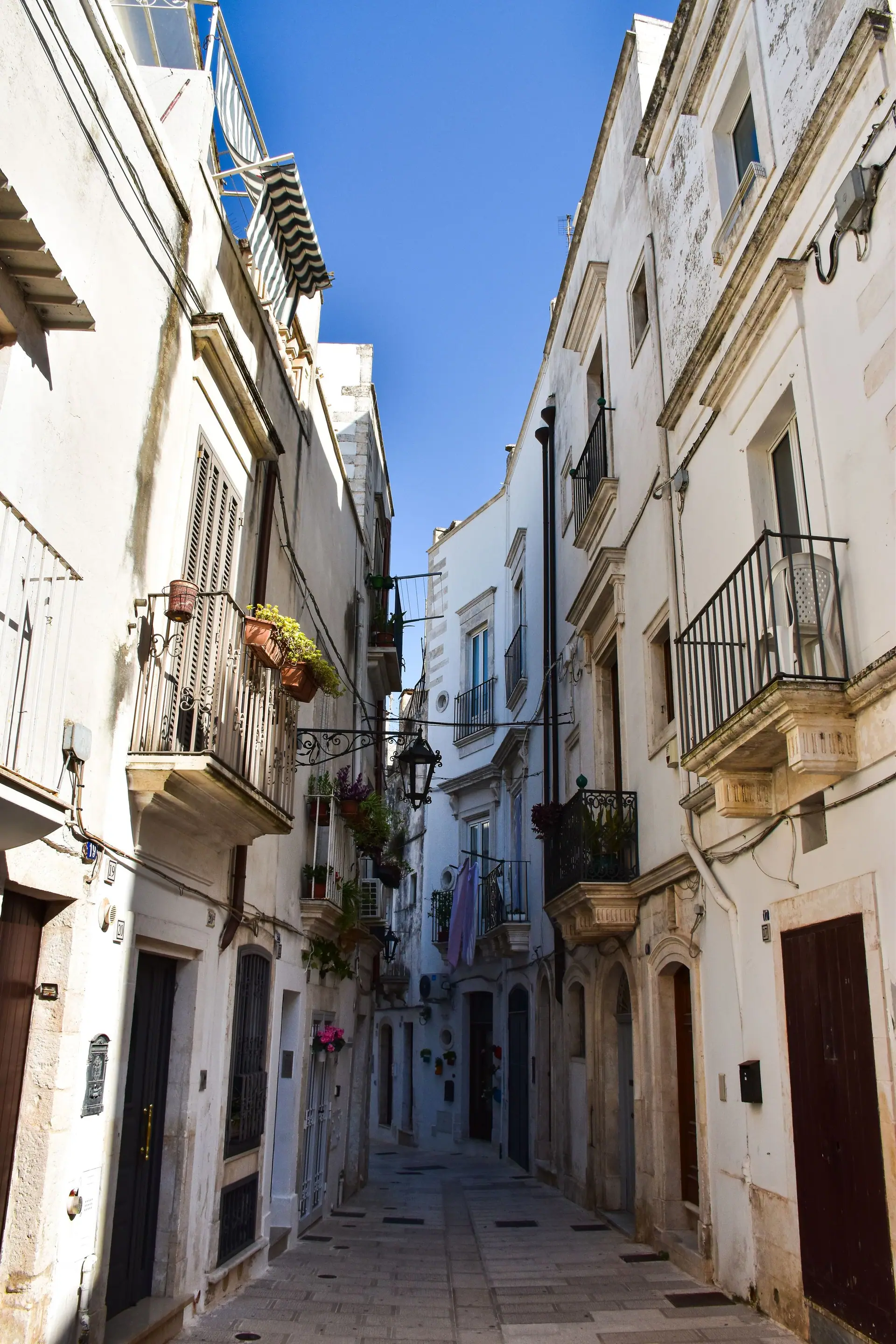
Why Locorotondo
If Alberobello is the sight everyone comes to see, Locorotondo is the one you come back to. The difference has less to do with beauty than with use: Alberobello is visited, Locorotondo is lived in. It's an inhabited village, where you pass people carrying their shopping home.
The name says it all. Locus rotundus, the round place: the historic centre is built in concentric circles on the summit of a hill, so that walking in a straight line eventually brings you back to where you started. It's a layout you only truly see from above or on a map, but one you feel while walking it.
The other distinctive feature is architectural, and it's a surprise in this region. Here, the houses of the centre are neither domes nor trulli: they're cummerse, narrow houses with a pointed roof covered in flat tiles. The silhouette calls Northern Europe to mind more than Puglia, and no one quite agrees on why.
Then there's the wine. Locorotondo lends its name to a dry white produced on the surrounding hillsides — a valley wine, not a coastal one, best drunk on the spot rather than anywhere else.
What you see on foot
There's no must-see monument in Locorotondo, and that's liberating. You park on the edge, step into the circle, and wander.
The lanes keep an immaculate white, narrow and nearly always in flower — geranium-filled balconies are taken seriously here. The cummerse follow one after another, tightly packed, their pointed roofs giving the village its jagged silhouette when seen from a distance.
Walking the whole circle takes about an hour at a relaxed pace. The real pleasure is stepping out of the circle now and again through the openings that look onto the valley: from several points along the edge, the view opens onto hillsides planted with vines and olive trees, dotted with isolated trulli. It's one of the most beautiful farmed landscapes in Italy, and it costs nothing to look at, from a low wall.
A late afternoon in Locorotondo
Unlike Alberobello, which we'd suggest visiting early in the morning, Locorotondo works better at the end of the day — it's a village, not a sight, and it's at its best as the light drops and residents come back out.
The valley's white wine
Locorotondo is a dry white, produced on the limestone hillsides surrounding the village. It's drunk young and cool, and pairs remarkably well with fish from the coast — handy when you're staying somewhere between the two.
It's also the best souvenir to bring back from a visit here: a few bottles bought on the spot cost a fraction of what they'd fetch elsewhere, and they drink very well in the evening, back at the house, under the pergola.
We won't recommend an address: producers and wine shops change, and a local's advice is worth more than a list written two years ago. Ask around when you're there — people will happily point you in the right direction.
Frequently asked questions
- How long does it take to visit Locorotondo?
- An hour or two is enough to walk the historic centre at a relaxed pace and enjoy the views over the valley. It's a village to wander through, not a sight to work through methodically.
- Why is Locorotondo called that?
- From the Latin locus rotundus, the round place: the historic centre is built in concentric circles on top of a hill. Walk in a straight line and you end up back where you started.
- What is a cummersa?
- The typical house of Locorotondo: narrow, with a steep double-pitched roof covered in flat tiles. A pointed silhouette, unusual in a region dominated by domes and the conical roofs of trulli.
- Should you visit Locorotondo or Alberobello?
- Both, but not on the same day. Alberobello is the spectacular sight, best seen early in the morning before the coach groups arrive. Locorotondo is an inhabited village, more pleasant at the end of the day. Doing both in summer means spending the afternoon in the car.
- How long is the drive from Polignano a Mare?
- About forty minutes from the countryside between Polignano and Monopoli, heading inland towards the Itria valley.
Forty minutes from the Itria valley
Masseria 1863 is a countryside house for eight guests, with its own pool and olive garden, between Polignano a Mare and Monopoli.